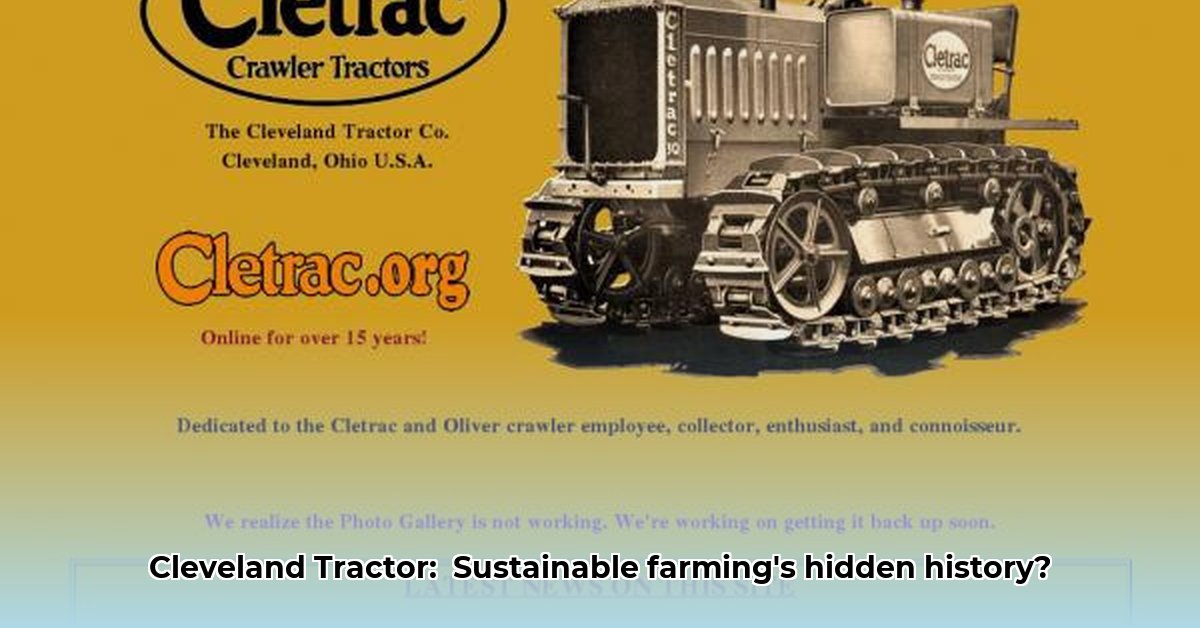
The Cleveland Tractor Company (CTC), later known as Cletrac, stands as a pivotal figure in the history of agricultural technology. Their pioneering adoption of crawler tractors—machines using continuous tracks instead of wheels—revolutionized farming in the early 20th century. This wasn't merely a technological advancement; it was a significant step towards more sustainable agricultural practices, a concept that remains central to modern farming challenges. But the Cletrac story is more than just a tale of technological triumph; it’s a compelling narrative of innovation, adaptation, and the inherent complexities of navigating economic shifts and global conflicts. Did their impact truly reshape the agricultural landscape? For more restoration information, see this helpful site. Let's delve into the fascinating history of Cletrac to uncover the answer.
From Muddy Fields to Military Might: The Cletrac Story
Cletrac's early success wasn't accidental. They cleverly combined innovative engineering with a shrewd marketing approach. Instead of relying solely on advertising, they actively demonstrated their tractors' capabilities directly to farmers, showcasing their superior traction and efficiency in real-world conditions. The Cletrac Model F, with its adjustable width, stands out as a particularly insightful design. This adaptability, crucial for minimizing waste and maximizing yields on diverse terrains, was—and continues to be—a cornerstone of sustainable farming. Was this prescient approach the key to their initial dominance? Certainly, their understanding of farmer needs played a significant role. However, even the most innovative technology couldn't fully shield them from the harsh realities of the market.
The Great Depression of the 1920s presented a severe test of CTC's resilience. Their ability to not just survive but adapt during this period reveals critical lessons in navigating economic uncertainty. Later, World War II brought a different set of challenges and opportunities. Cletrac shifted production to fulfill military contracts, a decision that dramatically increased their output. While this demonstrated their capacity for strategic pivoting, it simultaneously highlighted a potential vulnerability: over-reliance on external factors for sustained success. This period underscores the precarious balancing act businesses constantly face between innovation and economic reality. How did this dual experience shape their long-term trajectory? It's a question demanding close examination.
Beyond the Tracks: Innovation and Adaptation as Cornerstones of Success
The core of Cletrac's achievement resided in their unwavering commitment to innovation. Their engineers weren't simply building tractors; they were continuously refining designs, responding to farmer feedback, and adapting to evolving conditions. This ongoing improvement, encompassing experiments with various materials, engine types, and transmission systems to achieve optimal performance and efficiency, proved essential not only for creating superior products but also for maintaining a competitive edge. Did this relentless pursuit of improvement truly set them apart? The evidence suggests it did, attracting attention and significantly influencing the designs of other manufacturers, ultimately spreading the benefits of sustainable farming practices across the industry.
However, Cletrac's journey wasn't without its obstacles. The company faced the perpetual challenge of balancing cost reduction with quality maintenance, a constant struggle for any business aiming to thrive. Furthermore, they had to vigilantly monitor technological advancements to ensure their tractors remained competitive and appealing to farmers. Did their ability to constantly adapt ultimately determine their success or failure? This adaptability remains a crucial lesson for businesses seeking long-term viability in any industry.
A Legacy Forged in Steel and Innovation
Ultimately, the Cleveland Tractor Company was acquired by the Oliver Corporation before becoming part of White Motor Corporation. While the independent CTC ceased to exist, its influence continued to resonate. Cletrac's inventions fundamentally transformed tractor design, their contribution to sustainable agricultural practices set a new standard, and their journey through economic hardship and war provides a powerful case study in business resilience. What enduring lessons can we extract from their experiences? The answer necessitates a detailed analysis of their triumphs and setbacks.
Three Pivotal Points in the Cletrac Story:
- Crawler Tractor Innovation: Their pioneering use of crawler tracks dramatically reduced soil compaction, boosting yields and promoting sustainable practices.
- Adaptive Business Strategy: Their ability to pivot during the Great Depression and World War II showcases the importance of flexibility and adaptability in response to economic and geopolitical shifts.
- Continuous Improvement: Cletrac's dedication to ongoing design refinement and innovation kept them competitive and influenced subsequent tractor designs.
The legacy of the Cleveland Tractor Company extends far beyond the machines they produced. It serves as a compelling illustration of the enduring power of innovation, the critical importance of adapting to market conditions, and the valuable insights that can be gleaned from both triumphs and failures. Their story remains a case study worth revisiting and analyzing for anyone interested in agricultural history, sustainable practices, or the dynamics of business success.